People
Meet the members of the FRACTALS Research Group
Ca' Foscari University of Venice

Ca' Foscari University of Venice, Italy
Department of Environmental Sciences, Informatics and Statistics (DAIS)
Venezia-Mestre, Scientific Campus, Alfa Building, Room 514
Marco S. Nobile
Associate Professor @ University of Ca' Foscari University of Venice

Silvia Multari
Ph.D. Candidate in Science and Technology of Bio and Nano Materials @ Ca’ Foscari University of Venice
Silvia Multari is a Ph.D. Candidate in Science and Technology of Bio and Nano Materials at the Ca’ Foscari University of Venice, Department of Molecular Sciences and Nanosystems. She holds a bachelor’s degree in Pharmaceutical Biotechnology obtained at the University of Milan, and she is now specialising in computational applications to drug discovery, with a focus on the study of molecular interactions, combining physics-based and AI-driven approaches to investigate peptide and small-molecule binding.
She was a visiting student at the Technical University of Eindhoven (Eindhoven, the Netherlands) in the Molecular Machine Learning group led by professor Francesca Grisoni, and then at the Kyoto Institute of Technology (Kyoto, Japan) under the supervision of professor Giuseppe Pezzotti. Her main expertise lies in the application of molecular dynamics simulations, molecular docking and machine learning.

Matteo Grazioso
Ph.D. Student in Computer Science @ Ca’ Foscari University of Venice
Visiting Ph.D. Student in Computer Science @ University of Milano-Bicocca
Scientific Associate @ Italian National Institute of Nuclear Physics (INFN), Milano Bicocca Division
Matteo Grazioso is a Ph.D. Student in Computer Science at Ca’ Foscari University of Venice (Department of Environmental Sciences, Informatics and Statistics). His primary research focuses on Interpretable and Fairness-Preserving AI for high-risk applications, exploring the design of trustworthy AI systems to ensure that machine learning models in high-stakes domains are transparent, reliable, and ethically aligned.
His research interests span Computational Intelligence, Machine Learning, Interpretable AI, High-Performance Computing, Evolutionary Drug Discovery, and Optimization Algorithms. Matteo holds a Master’s Degree in Computer Science – Artificial Intelligence and Data Engineering, graduating summa cum laude from Ca’ Foscari University of Venice, where he also contributed as a Research Grant Holder.
Alongside his doctoral studies, Matteo is a Scientific Associate at the Italian National Institute of Nuclear Physics (INFN), Milano Bicocca Division, and a Visiting Ph.D. Student at the University of Milano-Bicocca (Department of Informatics, Systems and Communication). He is an active member of the IEEE and the IEEE Computational Intelligence Society (CIS), contributing to the CIS Task Force on Advanced Representation in Biological and Medical Search and Optimization.
Matteo’s overarching goal is to advance the development of trustworthy, interpretable, and ethically aligned AI systems, particularly in domains where AI’s societal impact is significant, such as healthcare and biomedical research.
University of Milano-Bicocca

Milan-Bicocca University, Italy
Department of Informatics, Systems and Communication (DISCo)
Milano, Viale Sarca 336, Edificio U14, Room 2004
Daniela Besozzi
Associate Professor @ University of Milano-Bicocca
Daniela Besozzi is Associate Professor at the Department of Informatics, Systems and Communication at the University of Milano-Bicocca, Italy, where she is also affiliated with the interdepartmental research centres “Bicocca Bioinformatics Biostatistics and Bioimaging Centre – B4” and “Bicocca Research Centre in Health Services – BReCHS”.
Her research is mainly focused on the mathematical modelling of complex biological systems – with a special interest in the cellular processes that lead to the onset and progression of multifactorial diseases – and the development of bioinformatics and artificial intelligence methods in medical disciplines, ranging from oncology to digital pathology. Her work contributed, among the others, to the identification of therapeutic targets in cancer cells and the screening for combination cancer therapies by means of fuzzy logic modelling and multi-objective optimization algorithms; the generation of a novel protocol to study cell proliferation in human acute myeloid leukemia xenografts by means of stochastic modelling and swarm intelligence meta-heuristics; and the development of a deep learning-based method for the morphometric characterization and multiclass segmentation of nuclei in thyroid lesions.
Daniela is co-author of more than 100 peer-reviewed works published in international journals, conference proceedings, and book chapters. She is co-inventor of a patented and CE-marked method to automatically predict the optimal patient-specific inversion time for late gadolinium enhancement imaging in cardiac magnetic resonance. She serves as associate editor for Frontiers in Systems Biology, section on Multiscale Mechanistic Modeling, and she is member of the IEEE CIS Task Force on “Advanced representation in biological and medical search and optimization”.
Daniela is an active member of the working group on gender equality at the University of Milano-Bicocca and contributed to editing the Gender Equality Plan (GEP). She is co-promoter of a pilot project to incentivize the enrolment of female students in STEM disciplines, and she regularly contributes to the organization of events related to the dissemination of knowledge, curiosity and passion about science and literature to the broader society. She has two cats.

Daniele M. Papetti
Assistant Professor @ University of Milano-Bicocca
Daniele M. Papetti is an assistant professor in Computer Science at University of Milano-Bicocca, Italy. His commitment to interdisciplinary research is further highlighted by his affiliation with the university's interdepartmental centre "Bicocca Bioinformatics Biostatistics and Bioimaging Centre – B4".
Starting with his Bachelor thesis, he conducted research in Computational Intelligence applied to the biomedical domain. His doctoral research focused on two main topics. Firstly, a large part of his work has been dedicated to the field of meta-problems and automated algorithm configuration. This research is centered on developing automatic solutions for problems such as the tuning of hyper-parameters, thus allowing for more robust and reproducible approaches across various applications. Secondly, he also worked on the application of machine learning and deep-learning techniques in the bio-medical domain to develop clinical decision support tools to support practitioners in the diagnostic and prognostic process.
In particular, he focused on Cardiac Magnetic Resonance for non-invasive assessment and computational pathology for the automated analysis of tissue samples. Beyond such core topics, he also conducted research on interpretable machine learning via fuzzy logic—he is one of the developers of pyFUME—and on Spiking Neural Networks, a third-generation model of neural networks that more closely mimics biological neural networks.
Daniele is chair of the IEEE Computational Intelligence Society Task Force on Advanced Representation in Biological and Medical Search and Optimization and member of the IEEE Bioinformatics and Bioengineering Technical Committee.

Giulia Capitoli
Researcher Tenure Track @ University of Milano-Bicocca
External Professor @ Ca' Foscari University of Venice
Assistant Professor in Biostatistics at University of Milano-Bicocca and Principal Investigator of a “My First AIRC Grant 2025” (MFAG), a prestigious five-year project funded with €500,000. Her research focuses on advancing thyroid cancer diagnosis through Artificial Intelligence, integrating medical imaging, molecular biology, and clinical data to improve diagnostic accuracy and reduce unnecessary surgical interventions.
Her work centers on the development of AI-driven multi-omics integration frameworks, combining digital pathology images, MALDI mass spectrometry imaging, and clinical datasets. These systems are designed to automatically identify cellular patterns and molecular biomarkers, providing interpretable risk predictions to support clinicians in complex diagnostic scenarios, particularly in indeterminate thyroid nodules.
She obtained her PhD in Biostatistics and Clinical Research from University of Milano-Bicocca in 2019 with excellent results, following a degree in Mathematics from University of Milano (2016). Her doctoral research focused on MALDI-imaging proteomics for the identification of biomarkers in thyroid biopsies for clinical diagnosis.
She is a member of the Bicocca Bioinformatics, Biostatistics, and Bioimaging research group and collaborates with the Mass Spectrometry group at University of Milano-Bicocca and San Gerardo Hospital (Monza).
Her research activity focuses on innovative statistical methods for biomarker discovery in biomedical research, with the goal of translating results from basic science into clinically applicable tools for precision medicine.
University of Bergamo

University of Bergamo, Italy
Department of Human and Social Sciences
Bergamo, Sede di Sant'Agostino, Via Sant'Agostino 2, Room 6
Paolo Cazzaniga
Associate Professor @ University of Bergamo
Paolo Cazzaniga is Associate Professor at the University of Bergamo, Italy. His research is located in the multidisciplinary field of Systems Biology. His activities range from the definition of mathematical models of complex (biological) systems to the simulation of their temporal dynamics by means of deterministic, stochastic or hybrid algorithms. He also defines and applies different methodologies for the analysis of the emergent behavior of the systems under investigation (e.g., parameter sweep analysis, parameter identifiability, sensitivity analysis).
His research effort also concerns the definition, implementation (for CPUs and GPUs) and application of Artificial Intelligence methods to problems in the fields of Bioinformatics, Systems Biology and Biomedicine, like, for instance, inferring the full haplotype of a cell starting from read sequencing data, estimating the unknown information of a complex system (e.g., molecular concentrations and kinetic constants), and enhancing the appearance and visual quality of biomedical images.
He has already successfully applied different methods, such as Particle Swarm Optimization, Genetic Algorithms, and Deep Neural Networks, to these problems.

Leone Bacciu
Research Grant Holder @ University of Bergamo
Research Fellow @ Ca’ Foscari University of Venice
Master’s student in Computer Science and Engineering at Politecnico di Milano with a BSc in Computer Science and an outstanding academic record, complemented by over five years of full-stack development experience. Recently completed a one year research grant at Ca’ Foscari University of Venice on a Computational Astrophysics High Performance Computing (HPC) project in collaboration with ICSC, INAF, and INFN and now is a Research Grant Holder at University of Bergamo.
Recently obtained a research grant at the University of Bergamo, where I am currently working on a project focused on evaluating the effectiveness of personalized rehabilitation protocols through biomechanical and physiological analysis.
Research focuses on Computational Intelligence (fuzzy logic, genetic programming, evolutionary computation, swarm intelligence, multi-objective optimization, and neural networks) with applications in AI/ML. Authored seven peer-reviewed papers (five as first author), including published work from my Bachelor’s thesis on AI/ML in the medical domain. Ongoing research explores Interpretable AI for explainable diagnosis and Deep Learning methods in Computational Pathology. My combined background in industry and academic research enables effective translation of theoretical advances in Computational Intelligence into applied systems across diverse domains.
External Members
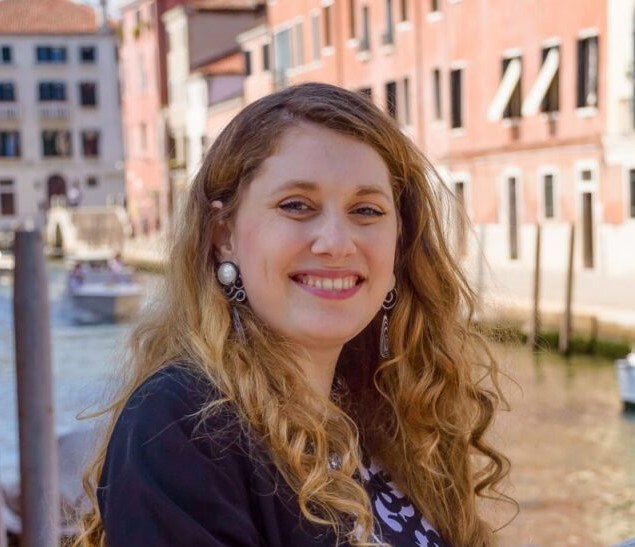
Chiara Gallese
Postdoctoral ResearcherUniversity of Tilburg
Chiara Gallese graduated in East Asian Languages, Economics, and Law from Ca’ Foscari University and earned her PhD in Asian Studies from the same university in 2017 with a thesis on private international law in Japan, which was awarded the Bonacossa Prize for best doctoral thesis. She also holds a law degree from the University of Padua. In 2023, she was awarded the European Marie Skłodowska Curie Postdoctoral Fellowship in personal data protection.
She is currently a visiting lecturer for the “Digital Ethics” course at the International College of Ca’ Foscari. For Ca’ Foscari, she also contributed to drafting the guidelines on the use of artificial intelligence in research.
She is a member of the European Commission’s working groups for the drafting of the two Codes of Conduct on Artificial Intelligence and of the IEEE technical committees for education on the ethics and legal aspects of artificial intelligence. She also sits on the ethics committees of several European projects.
She is an Associate Editor of the IEEE Transactions on Artificial Intelligence, an area editor of Data & Policy (Cambridge University Press), an international editor of the Journal of Digital Technologies and Law, and a member of the editorial board of the journal Genius. In 2022, she won the best paper award at the IEEE CIBCB conference for an article on the ethics of data reuse.
During her career, she has obtained the bar exam and the certification as an international privacy expert (CIPP/E). She served on the regulatory committee of the Eindhoven Medtec Innovation Centre and worked as a privacy expert at the University of Eindhoven. She has also lectured on artificial intelligence at several European universities and institutions.
In 2024, she participated as a speaker at a TEDx event on artificial intelligence, presenting the FanFAIR software for the semi-automatic analysis of the fairness of datasets, of which she is co-creator.


Luca Manzoni
Associate ProfessorUniversity of Trieste
Luca Manzoni is an assistant professor at the University of Trieste, Italy. He obtained his Ph.D. in Computer Science from the University of Milano-Bicocca in 2013. In 2012 he obtained a JSPS postdoctoral fellowship and in 2017 he obtained an award as the best young postdoc in Computer Science and Mathematics at the University of Milano-Bicocca. He has published more than 80 paper in international journal, conferences, and workshops. His interests are in the areas of natural computing models, like P systems, reactions systems, and cellular automata and in the area of evolutionary computation, and genetic programming in particular.

Nicole Inverardi
PhD StudentIntesa Sanpaolo S.p.A. & University of Milano-Bicocca
Nicole Inverardi is currently a Data & AI Ethicist at Intesa Sanpaolo, a position she has held since 2022. She completed her studies at the Università Cattolica in Milan, earning a Master’s Degree in Philosophy. Currently she is also a PhD Student at University of Milano-Bicocca, where her research focuses on the ethical implications of AI in the financial sector, with a particular emphasis on data privacy, algorithmic bias, and the responsible use of AI technologies. In addition to her role at Intesa Sanpaolo, Nicole is an active member of the academic community, contributing to the debate on Al ethics through conferences, talks, and publications.